Fed Hawkishness and AI Fears Trigger Risk-Off: Markets Face Thanksgiving Week Test

Market Sentiment Overview
Risk appetite collapsed this week as AI valuation concerns, hawkish Federal Reserve commentary, and weakening global growth signals triggered broad-based selling across equities and cryptocurrencies. Bitcoin plunged 35% from its October peak to $82,000, while major US indices fell 5.5-8.5% from recent highs. The US Dollar surged to six-month highs near 100.39 despite mixed economic data, as Fed rate cut expectations for December crashed from 90% to just 27%. Gold struggles to hold $4,000 despite equity weakness, signaling internal vulnerability after its extended 2025 rally.
Currencies
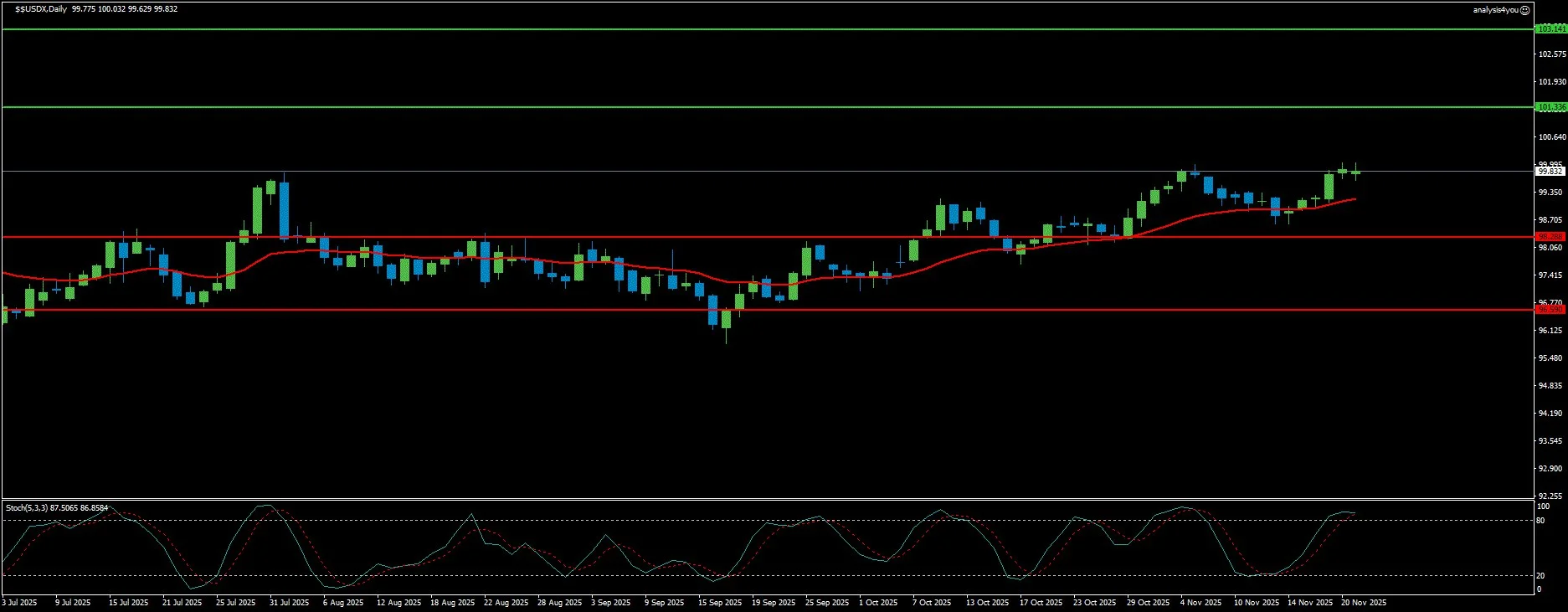
USD Index: Surges to Six-Month Highs (100.39)
Current Trend: Bullish rket Sentiment: Strong
The US Dollar Index posted modest weekly gains of 0.89%, reaching six-month highs of 100.39 as hawkish Fed rhetoric crushed December rate cut expectations. The Fed’s October meeting minutes revealed a deep division among FOMC members, with most officials believing that rates should remain unchanged for the rest of the year. Markets now price only a 27% probability of a December cut, down from 90% before the October meeting. September NFP showed 119,000 job additions (beating 50,000 expectations), though unemployment ticked up to 4.4%. The blackout period begins on November 29, making this week’s commentary crucial for guidance.
Potential Resistance: 101.34; 103.14
Potential Support: 98.29; 96.59
EUR/USD: Tests Critical 1.1500 Support (1.1500)
Current Trend: Bearish Market Sentiment: Negative
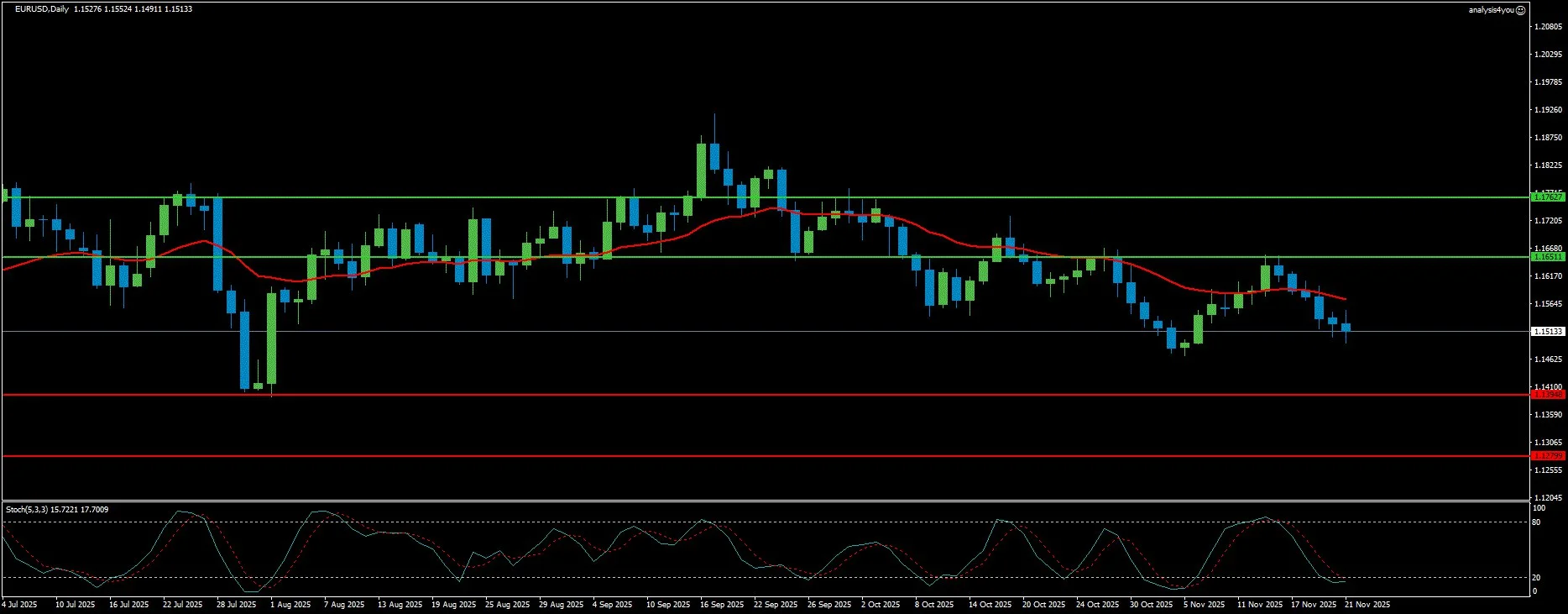
EUR/USD suffered five consecutive days of losses, refreshing two-week lows near 1.1500 as Dollar strength and tepid European data weighed heavily. The pair trades below the bearish 20-day SMA at 1.1566, with technical indicators pointing to further downside. Eurozone inflation confirmed at 2.1% YoY in October, while consumer confidence deteriorated to -14.2 in November (worse than -14.0 expected). Germany’s November PMI came in at 52.1, versus the expected 53.7, with both manufacturing and services contracting. ECB officials maintain their “wait-and-see” stance, with the December meeting expected to keep rates on hold.
Potential Resistance: 1.1651; 1.1763
Potential Support: 1.1395; 1.1280
GBP/USD: Death Cross Looms Below 1.3100 (1.3050)
Current Trend: Bearish (Critical) Market Sentiment: Very Negative
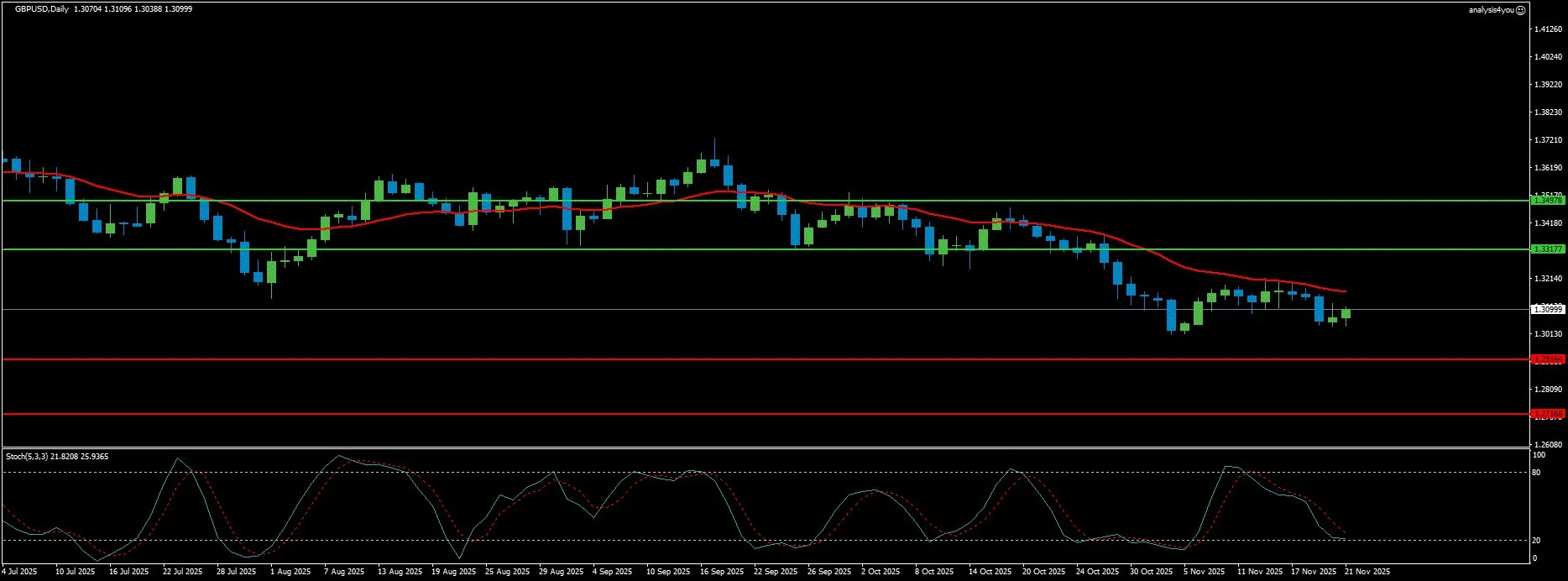
The Pound broke down below 1.3100, testing 1.3050 as UK fiscal concerns and weakening economic data triggered sustained selling pressure. UK CPI cooled to 3.6% in October from 3.8%, reviving BoE rate cut bets with December cut probability rising to 85%. Retail sales plunged 1.1% in October versus expectations of flat growth, while November PMI collapsed to 50.5 from 52.2 (expected 51.8). Technically, the 50-day SMA is approaching a Death Cross with the 200-day SMA, confirming bearish momentum. Wednesday’s UK Autumn Budget from Chancellor Reeves emerges as the week’s critical event, with speculation on tax increases and fiscal tightening.
Potential Resistance: 1.3318; 1.3498
Potential Support: 1.2916; 1.2717
Stocks
S&P 500: Tests Monthly Lows, Death Cross Threat (5,670)
Current Trend: Bearish Market Sentiment: Risk-Off
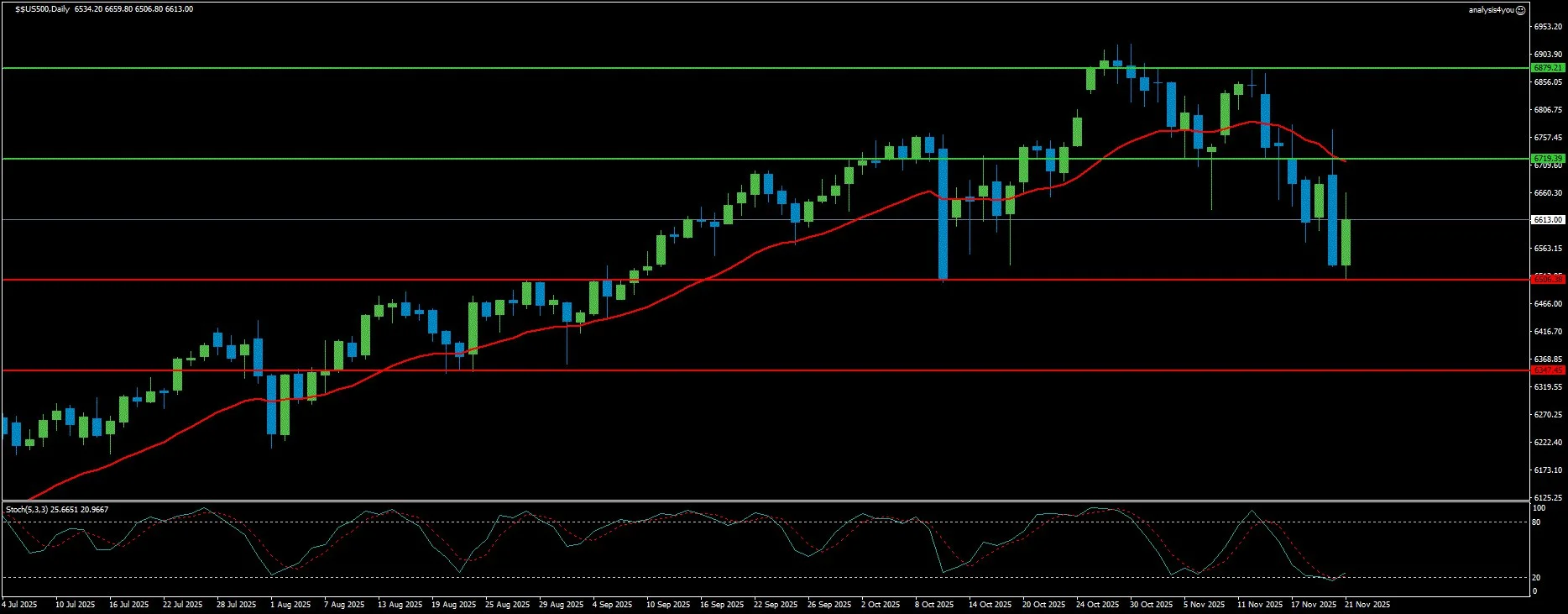
The S&P 500 plunged more than 6% from record highs, breaking below the October low at 6,669 and testing critical support at 6,530. The index posted weekly losses exceeding 2%, marking a break of the monthly opening range amid AI valuation fears and hawkish Fed positioning. Even Nvidia’s strong earnings report (65% net income jump) failed to reverse negative momentum as investors question the sustainability of AI-related rallies. Technical indicators show the index trading below all major moving averages, with RSI at 36.55 signaling persistent selling pressure.
Potential Resistance: 6719.39; 6879.21
Potential Support: 6506.38; 6347.45
Commodities
Gold: Struggles Despite Equity Weakness (4,080)
Current Trend: Neutral/Vulnerable Market Sentiment: Mixed
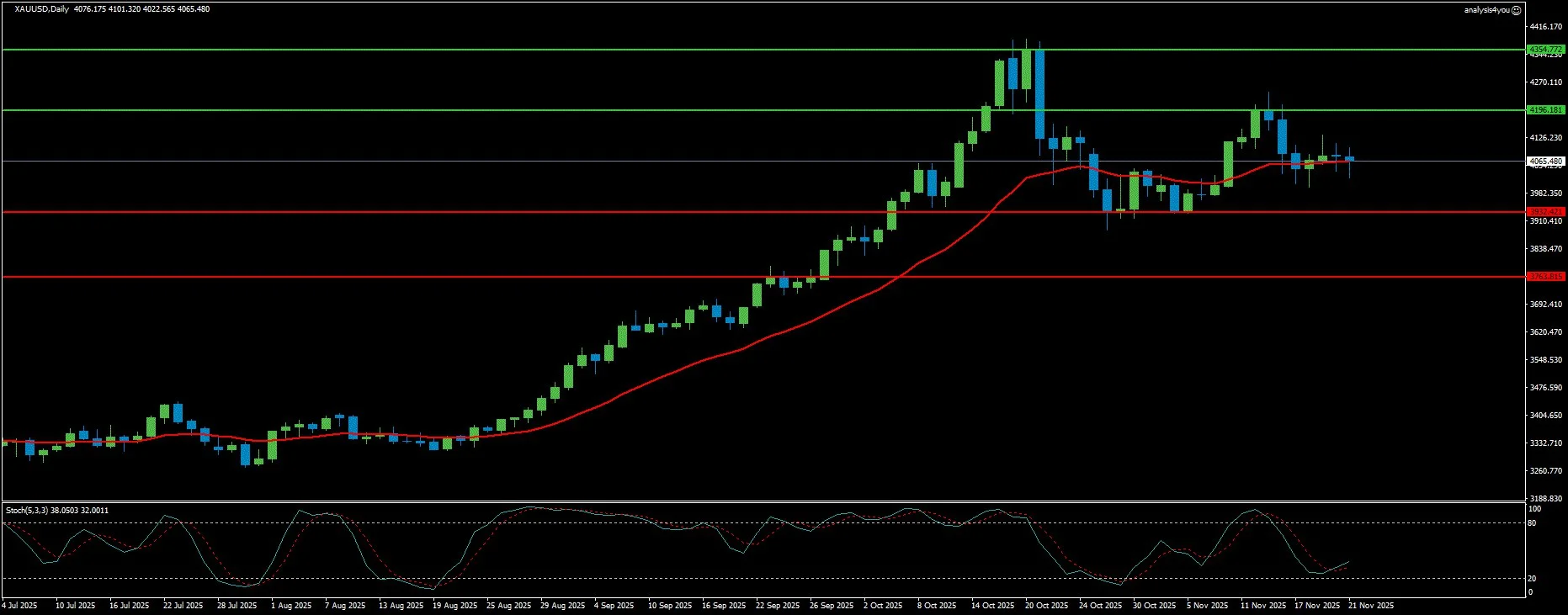
Gold edged lower after rising 2% the previous week but managed to stabilize above $4,000, currently trading around $4,080. The precious metal’s inability to capitalize on equity market weakness reveals internal vulnerability after its extended 2025 rally. Diminishing Fed rate cut bets (December probability down to 35% from 50%) and hawkish FOMC minutes pressured gold throughout the week. Technical analysis shows gold fluctuating around the 20-day SMA within a symmetrical triangle pattern, with RSI near 50 reflecting indecisiveness.
Potential Resistance: 4196.18; 4354.77
Potential Support: 3932.42; 3763.81
WTI Crude Oil: Extends Losses Toward $55 (58.06)
Current Trend: Strongly Bearish Market Sentiment: Very Negative
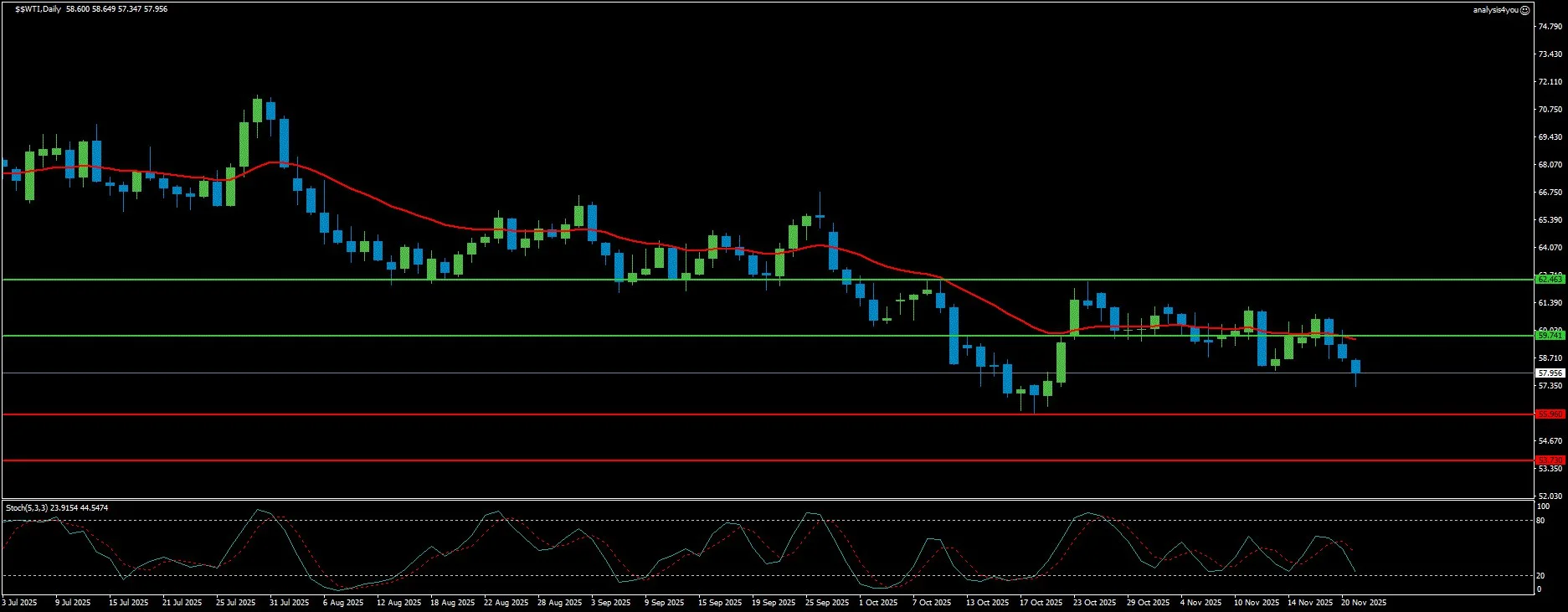
WTI crude closed at $58.06, down 1.20% for the week, marking the second consecutive weekly decline despite sharp US crude inventory drawdowns of 2.8 million barrels. The market prioritizes weakening global demand over supply tightness, with China’s manufacturing PMI remaining below 50 at 49.5 and the Eurozone PMI falling to 49.5. US rig count rose to 419 (+2 week-over-week), while production remains near record 13.83 million bpd. Progress in Russia-Ukraine peace negotiations reduced the geopolitical risk premium by 2.6% in a single day. Saudi Arabia’s exports hit seven-month highs above 7.2 million bpd, prioritizing market share over price defense. Analysts warn WTI could fall another 5% toward $55 if selling pressure continues.
Potential Resistance: 59.74; 62.46
Potential Support: 55.96; 53.73
Crypto
Bitcoin: Capitulation Intensifies at 7-Month Lows (82,000)
Current Trend: Strongly Bearish Market Sentiment: Extreme Fear
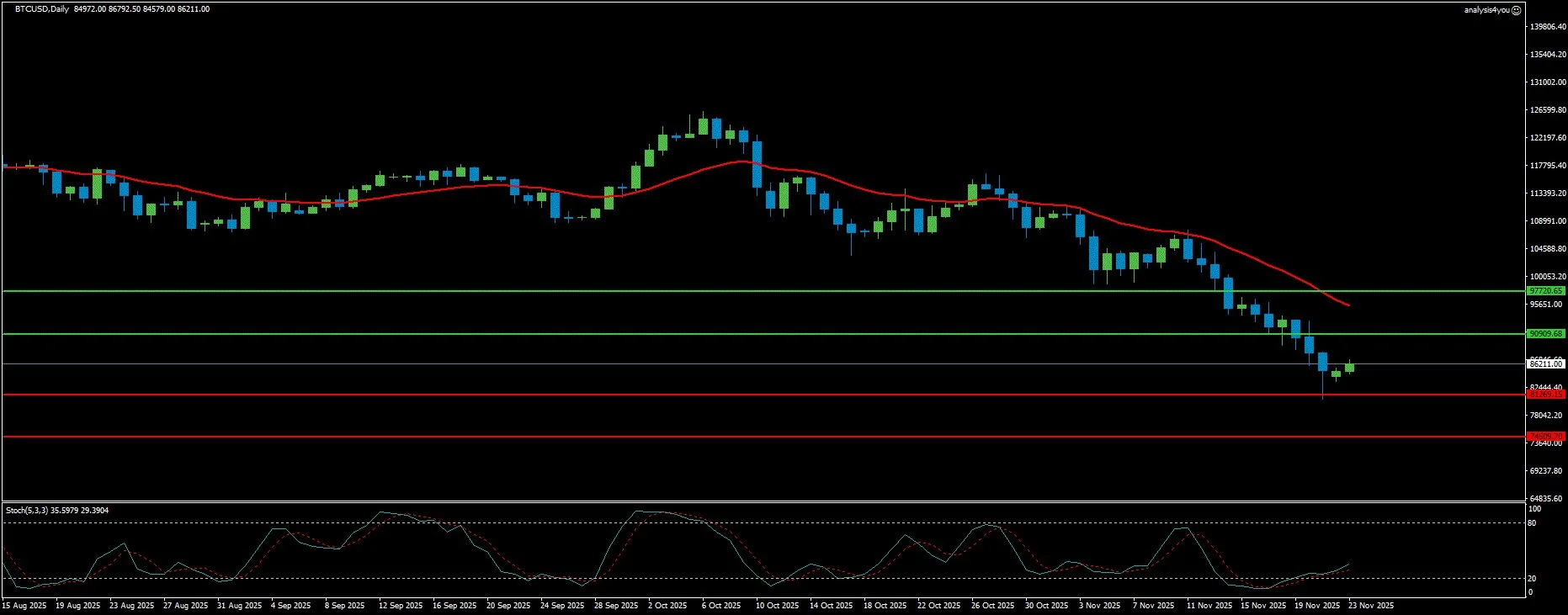
Bitcoin crashed to seven-month lows near $82,000 (currently $82,000), plunging 35% from its October all-time high of $126,199. The week saw $1.82 billion in liquidations (82% long positions), with over 402,738 traders liquidated. Institutional demand collapsed as Bitcoin spot ETFs recorded $1.45 billion in net outflows for the week, marking the fourth consecutive week of withdrawals. Thursday alone saw $903.11 million in outflows—the second-largest single-day negative flow since ETF launch. The Fear and Greed Index plummeted to 14, nearing extreme fear levels last seen in February. On-chain metrics show Short-Term Holder realized losses spiking to $523 million per day—the highest since the FTX collapse. The average ETF holder’s cost basis sits at $89,651, with Bitcoin now trading below this critical threshold.
Potential Resistance: 90909.68; 97720.65
Potential Support: 81269.15; 74509.70
Key Events This Week (November 25-29, 2025)
Major Economic Releases
- Monday: US ISM Manufacturing PMI (November), UK Nationwide House Prices, Germany IFO Business Climate
- Tuesday: US PPI (September – delayed data), Retail Sales (September – delayed), Conference Board Consumer Confidence (November)
- Wednesday: UK Autumn Budget (biggest event), US Durable Goods Orders (September – delayed), Initial Jobless Claims
- Thursday: US Thanksgiving Holiday (Markets closed)
- Friday: Black Friday (Early market close, low liquidity), Germany November HICP, US Personal Income/Spending
Central Bank Calendar
- Wednesday, November 26: Reserve Bank of New Zealand (RBNZ) Rate Decision – Governor Christian Hawkesby’s final meeting before stepping down on November 30
- Fed Blackout Period: Begins November 29 – This week’s Fed commentary is crucial
ECB Speakers Calendar
- Monday: ECB’s Cipollone, Elderson, Lagarde, Nagel
- Tuesday: ECB’s Sleijpen, Cipollone
- Wednesday: ECB’s Lane, Lagarde
- Thursday: ECB’s Cipollone, BoE’s Greene
- Friday: ECB’s Nagel
Week Ahead Outlook
The shortened Thanksgiving week brings critically low liquidity conditions Thursday-Friday, heightening volatility risk. Wednesday’s UK Autumn Budget could prove a “make-or-break” moment for Sterling, with tax increase speculation weighing heavily on gilts and GBP. Chancellor Reeves faces a £20bn fiscal gap, with plans for higher personal taxes abandoned but property tax increases likely.
The absence of October CPI data means next week’s PCE report becomes critical for Fed policy expectations. Persistent weakening in consumer confidence could signal significantly weak Q4 GDP growth, highlighting shutdown damage. With the approved bill only funding the government until January 30, another shutdown risk looms.
Fresh Ukraine-Russia peace deal progress, while potentially stabilizing geopolitics, removes the risk premium supporting both oil and gold. The yen faces heightened intervention risk as USD/JPY surged to 157.88, approaching the critical 160 level—low liquidity conditions may provide the BoJ’s best opportunity to intervene.
Bitcoin’s collapse below the $85,000 ETF cost basis and continued institutional outflows suggest no bottom is in sight, with potential tests of $74,433 (MicroStrategy basis) or even April lows at $71,769. The crypto market faces structural headwinds beyond just macro conditions.
Risk Management Critical: Holiday-shortened week with minimal liquidity, major fiscal policy announcements, and elevated volatility across all asset classes require exceptional caution and tight stop-losses.